Cases Where Community Rules and Post-Handling Standards Change After a Management Change
When a forum changes ownership, a social media group appoints new administrators, or an online platform undergoes a major restructuring, users often look first at the Community Guidelines. In reality, however, the earliest change is not always the wording of the rules—it is how those rules are enforced.
A post that would once have been removed may now remain online but receive reduced visibility. Content previously reviewed by human moderators may instead be evaluated through automated classification. Community moderation tools may also function differently after changes to API policies or platform infrastructure. For that reason, understanding how a community has changed requires more than reading the list of prohibited behaviors. Users should also examine how the platform labels content, limits distribution, moves posts to private status, suspends accounts, and handles appeals.
Enforcement Philosophy May Change Before Removal Standards
A new management team does not have to rewrite every rule to change how a community operates. Keeping the same guidelines while adopting a different enforcement philosophy can significantly alter the user experience.
X is a clear example. In 2023, it introduced its “Freedom of Speech, Not Reach” approach, allowing some rule-violating posts to remain online while reducing their visibility instead of removing them outright. Enforcement may also include public labels, advertising restrictions, user feedback, content removal, or account suspension depending on the severity of the violation.
X’s 2024 Global Transparency Report further shows that moderation involves multiple actions—including labeling, removals, account suspensions, automated detection, human review, and appeals—rather than a simple decision to keep or delete content.
As a result, evaluating a management transition should involve more than asking whether a particular type of content is still prohibited. More useful questions include:
- Was the post removed entirely or simply made less discoverable?
- Are both authors and viewers notified through warning labels?
- Does the enforcement action apply only to a specific post or to the entire account?
- Can users request a review or appeal the decision?
Two communities may publish nearly identical Community Guidelines yet create very different experiences if one primarily removes content while the other relies on labeling, visibility restrictions, or other forms of enforcement.
Business Models and Platform Tools Can Reshape Moderation Standards
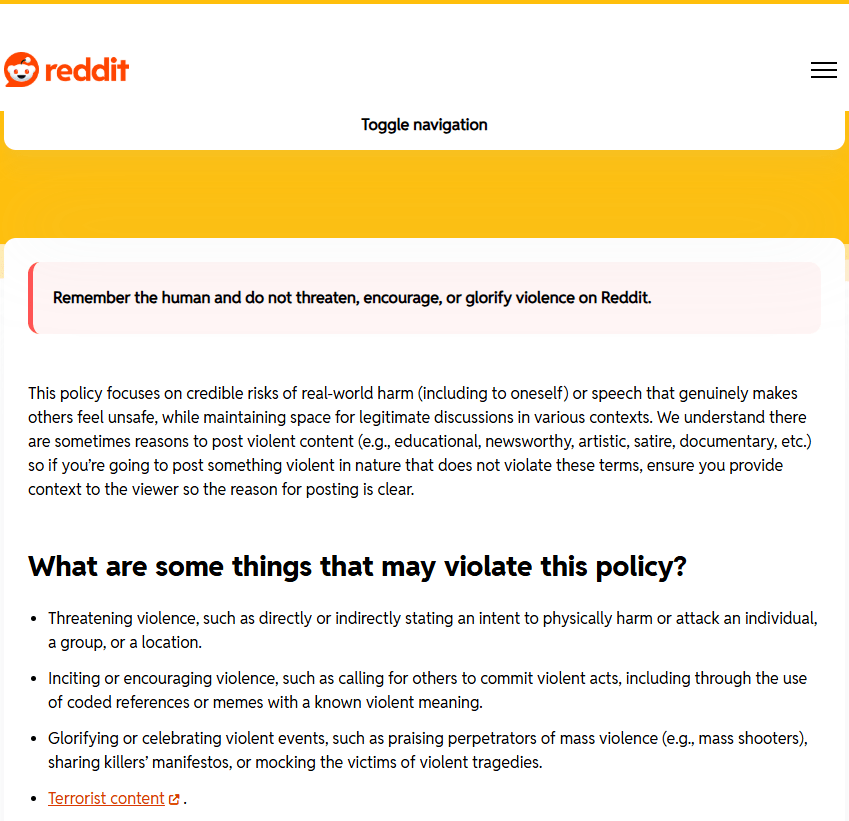
Not every moderation change is driven by a new management team’s preferences. It may instead result from changes to revenue models, API access, staffing, or moderation tools.
Reddit’s 2023 API controversy illustrates this. While Reddit continued providing free API access for certain non-commercial accessibility apps and moderation tools, the changes showed how dependent many communities had become on third-party applications.
Within subreddits, bots and moderator tools help filter spam, enforce submission requirements, organize moderation queues, and process reports. When API pricing or access changes, moderators may need to review more content manually or adjust their approval standards.
Reddit’s Moderator Code of Conduct also stresses clear community rules and transparent expectations. However, maintaining those standards depends on having adequate staff and technical resources. As a result, slower approvals or inconsistent moderation may reflect operational changes rather than a deliberate shift in community rules.
Sensitive Content Policies Should Address Existing Posts and Appeals
Changes to policies on adult content and other sensitive topics can affect not only new submissions but also content published years earlier.
When Tumblr introduced its adult content ban in 2018, posts identified by its automated system could be moved to private mode, with users able to appeal flagged content.
The policy later drew scrutiny after the New York City Commission on Human Rights investigated reports that Tumblr’s automated filters disproportionately affected LGBTQ-related content. Under a 2022 settlement, Tumblr agreed to review potential bias in its classification system, improve staff training, and strengthen its appeal process.
This case demonstrates that a major policy change should be evaluated from at least four perspectives:
- How will newly submitted content be handled?
- Will the policy apply retroactively to existing posts?
- Can automated systems generate classification errors?
- Do users have a practical way to challenge incorrect decisions?
Simply announcing that “inappropriate content will be restricted” is not enough. Community members should understand whether older posts will be hidden, moved to private status, or permanently removed; whether decisions are made by automated systems, human reviewers, or both; how long the appeal process takes; and how mistakenly flagged content can be restored.
Community-Based Verification Changes Who Makes Moderation Decisions
Platforms can also change how they handle misinformation by shifting from expert review to community-based verification.
In January 2025, Meta announced that it would replace third-party fact-checking in the United States with Community Notes, where users write and rate contextual notes instead of relying on external fact-checkers. The company also said it would stop automatically reducing the reach of fact-checked content, favoring contextual labels instead.
According to the Oversight Board, third-party fact-checking may lead to labels, reduced distribution, or advertising restrictions, while Community Notes appear only after users reach sufficient consensus. Posts with Community Notes are not automatically demoted or subject to account penalties.
This shift moves more responsibility to the community and changes both the speed and method of moderation, focusing on added context rather than automatic enforcement.
Older Posts Are Not Automatically Protected by Previous Rules
A common misconception is that content complying with the rules when it was published will always remain unaffected. In reality, each community decides how older posts are handled after a management transition.
Some platforms apply new standards only to future submissions. Others may revisit older content if it is reported, reshared, promoted again, or clearly conflicts with current policies. In some cases, posts remain online but are moved to private status, labeled, or excluded from recommendations instead of being deleted.
It is also important to distinguish between actions taken against content and those applied to an account. Removing or hiding a post does not automatically result in a warning or suspension, while keeping a post online does not necessarily mean its visibility remains unchanged.
When reviewing updated policies, users should look for three key details: whether the changes apply retroactively, how existing posts will be handled, and whether enforcement affects the account’s moderation history.

Transparency Matters as Much as the Rules
Even strict policy changes are easier to accept when platforms clearly explain when they take effect, what they cover, and how enforcement works. By contrast, minor updates can create confusion if they are introduced without notice or a clear appeal process.
The European Union’s Digital Services Act (DSA) requires platforms to explain why content is removed or accounts are suspended. It also requires users to have access to appeal mechanisms, either through the platform itself or through certified out-of-court dispute resolution.
From a user’s perspective, any significant policy update should answer several practical questions:
- When does the new policy take effect?
- Does it apply platform-wide or only to specific regions, languages, or content categories?
- Will existing posts be reviewed under the new standards?
- Are decisions made by automated systems, human reviewers, or both?
- Will users receive a clear explanation when action is taken?
- Is there an appeal process, a response timeline, and a way to restore content if a decision is reversed?
Although legal obligations differ across jurisdictions, these questions remain useful for distinguishing a transparent policy transition from one that leaves members guessing how moderation is being applied.
Signs That Moderation Standards Have Changed
Formal announcements do not always arrive before moderation practices begin evolving. Users often notice the shift through everyday interactions.
Posts similar to older discussions may suddenly be locked, moved to different sections, or require additional sources. New warning labels may appear, submission templates and flairs may be updated, or approval times may change noticeably. Communities may also revise who is allowed to post, comment, or create certain types of content by changing eligibility requirements tied to account rank, reputation, or activity history. See How Community Posting Restrictions Vary Based on Account Rank and Activity History for a detailed explanation.
Moderator communication can also reveal changing priorities. Removal notices may cite different policies, emphasize new expectations, or explain that certain content no longer aligns with the community’s direction. In some cases, posts remain online but disappear from recommendations, search results, or other high-visibility areas.
However, a few isolated moderation decisions are not enough to conclude that the entire policy has changed. Users should compare multiple sources, including official announcements, updated guidelines, revision histories, transparency reports, and how similar posts are currently being handled.
Responding After Your Content Is Moderated
If a post is removed, labeled, or restricted after a management change, first identify exactly what action was taken.
Check whether the content was deleted, moved to private status, made less visible, or whether the action affects your account. Also compare the post date with the effective date of the new policy to see if it applies retroactively.
If you believe the decision is incorrect, base your appeal on verifiable facts, including the specific content, the cited rule, and any missing context. Simply arguing that the post “used to be allowed” is rarely enough.
If the policy clearly applies, updating the content or reposting it correctly is usually more effective than repeating the same submission. For automated errors, save the moderation notice, timestamps, and the original content to support your appeal.
Adapting During a Management Transition
After a management change, past experience remains useful, but it should no longer be your primary reference. Members are better served by following recent announcements, updated Community Guidelines, moderator guidance, and examples of recently approved posts.
Most importantly, do not assume that unchanged rules mean unchanged moderation. Enforcement philosophy, moderation tools, automated systems, verification methods, and appeal procedures can all evolve before the written policies are fully revised.
A well-managed community does more than explain what is prohibited. It also makes clear how moderation decisions are made, what enforcement actions may be taken, whether existing posts are affected, and where users can request a review. When these processes are transparent, members can adjust with confidence instead of relying on outdated expectations.