
July 19, 2026
How to Calculate the Minimum Subscription Coverage Needed to Watch Only Your Favorite Team’s Matches
Watch Every Game Your Favorite Team Plays Without Paying for Unused Sports Subscriptions
Watching sports online can become expensive when you subscribe based on the whole league instead of the team you actually follow. A full league pass, multi-sport bundle, or premium live TV package may include hundreds of games, but if you only care about one team, most of that coverage may go unused.
The smarter approach is to calculate your minimum subscription coverage: the smallest combination of services that gives you access to the matches you truly want to watch.
This means checking your team’s schedule, identifying where each match is broadcast, confirming regional restrictions, and comparing monthly, seasonal, and team-specific options before paying.

Start With Your Team’s Actual Schedule
Before looking at subscription prices, start with your team’s actual schedule. Do not ask, “Which service has the most games?” Ask, “Which service covers the games my team actually plays?”
Your team’s season may include league matches, cup matches, international competitions, playoffs, finals, preseason games, or special events. You do not need coverage for the entire league if you only plan to watch one team.
Start by separating your matches into priority groups:
| Match Priority | Meaning | Subscription Approach |
|---|---|---|
| Must-watch matches | Rival games, playoffs, finals, key league matches | Should be fully covered |
| Nice-to-watch matches | Regular games you may watch if available | Cover only if affordable |
| Low-priority matches | Games you are likely to skip | Do not overpay for these |
This first step prevents you from buying a large package just because it looks complete. A plan with more total games is not automatically better if it does not cover the specific games you care about.
Build a Match-by-Match Coverage Map
The most useful way to calculate minimum coverage is to create a match-by-match coverage map. This can be a spreadsheet, note, or simple table. The goal is to list every match you care about and identify exactly where it is available.
Use a table like this:
| Date | Match | Competition | Broadcaster or Platform | Blackout Risk | Subscription Needed |
|---|---|---|---|---|---|
| Oct 12 | Team A vs Team B | League | Platform A | Low | Basic plan |
| Oct 18 | Team A vs Team C | League | Regional Network | High | Regional add-on |
| Oct 25 | Team A vs Team D | Cup | Platform B | Low | Monthly pass |
Once you fill this out, you can see patterns clearly. Maybe most of your team’s games are on one platform. Maybe only a few important matches require a second service. Maybe local games are blocked on the streaming plan you were planning to buy.
This map is more useful than reading a service’s marketing page because it shows whether that service actually solves your viewing problem.
After mapping your schedule, count how many matches each platform covers:
| Platform | Matches Covered | Importance | Decision |
|---|---|---|---|
| Platform A | 32 matches | High | Main subscription candidate |
| Regional Network | 10 matches | High if local games matter | Check blackout rules |
| Platform B | 3 matches | Medium | Consider short-term pass |
| Platform C | 1 match | Low | May not be worth subscribing |
This helps you avoid paying for a service that only covers a small number of matches, especially if those matches are not high priority.
Compare Subscription Types and Costs
Once you know which platforms matter, compare the actual subscription options. The best choice depends on your schedule, location, and viewing habits, not only on the number of channels or games a plan advertises.
Common options include:
| Subscription Type | Best For | Main Risk |
|---|---|---|
| League pass | Out-of-market fans or league-wide viewers | May exclude local or nationally broadcast games |
| Single-team package | Fans who mainly follow one team | May not include every team match |
| Regional sports network | Local fans | May require a bundle or add-on |
| Live TV streaming bundle | Fans needing local and national channels | Can be expensive |
| Monthly pass | Short-term or selective viewing | Costly if used all season |
| Annual or season pass | Full-season viewers | May include months you do not need |
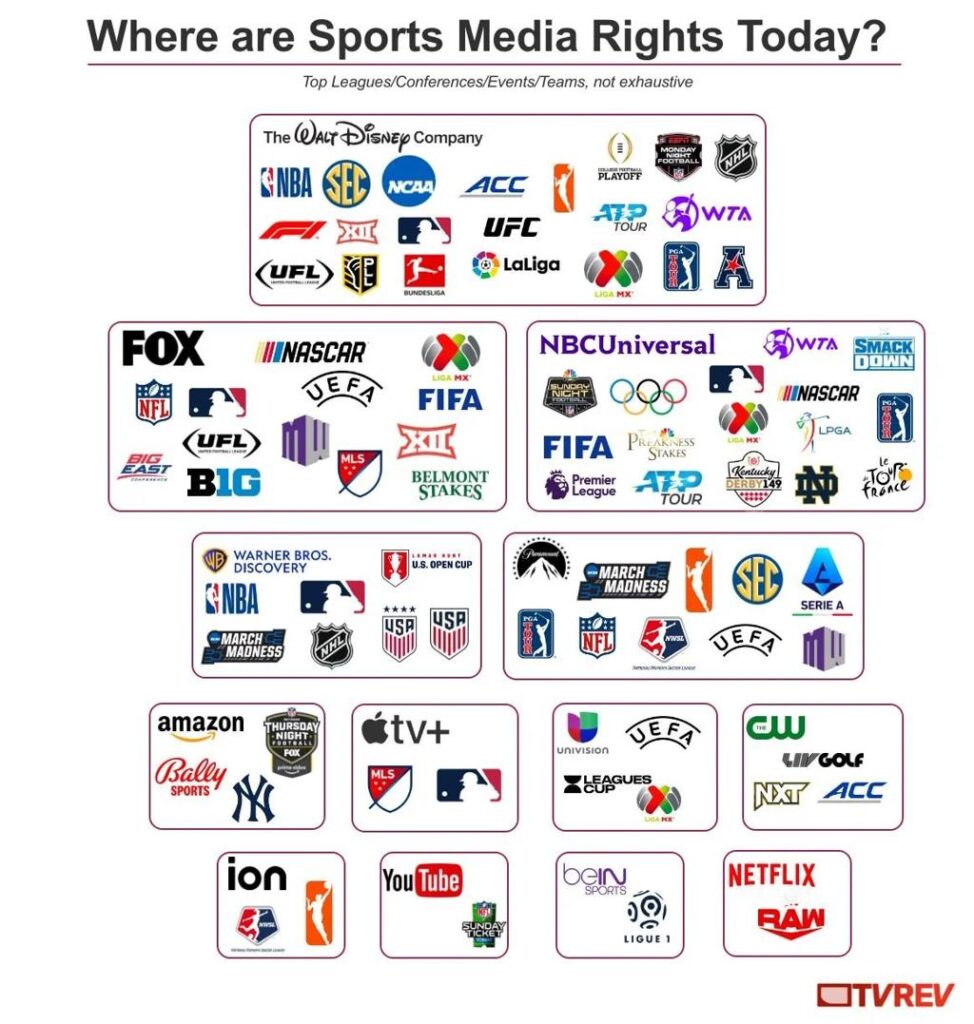
You can also use official league, platform, or live TV websites to confirm where specific matches are available. These sites should be used for verification, not as a shortcut to skip your own match-by-match coverage map.
| Website | Best For Checking | What to Verify |
|---|---|---|
| NBA League Pass | NBA games, League Pass, Team Pass options | Local blackout rules, national TV exclusions, monthly vs season plan |
| MLB.TV | MLB out-of-market games and single-team options | Blackout restrictions, single-team package, renewal terms |
| NFL+ | NFL streaming in the United States | Live game limits, mobile/TV access, local and primetime coverage |
| DAZN NFL Game Pass | NFL Game Pass outside the U.S. | Country availability, full-game access, playoff/Super Bowl coverage |
| Apple TV / MLS | MLS matches | Whether all matches are included, blackout rules, Apple TV subscription requirements |
| ESPN | ESPN sports, college sports, selected league coverage | Whether the match is on ESPN streaming or requires a TV provider |
| Peacock Sports | Premier League, NBC sports, selected live events | Plan required, live sports availability, regional limits |
| Paramount+ Sports | CBS sports, soccer, selected live events | Whether live sports require a specific plan |
| YouTube TV | Live TV channels, sports networks, local channels | Local channel availability, sports add-ons, regional restrictions |
| Hulu + Live TV | Live sports channels and cable replacement | Channels in your area, blackout rules, trial/cancellation terms |
| Fubo | Sports-focused live TV streaming | Regional sports networks, add-ons, local channel availability |
| DIRECTV Sports | Regional sports networks and sports bundles | RSN availability by ZIP code, sports pack cost, local team coverage |
| Prime Video Sports | Selected live sports and add-on subscriptions | Whether the match is included with Prime or requires an add-on |
A yearly plan may look cheaper per month, but it is not always the cheapest choice if your team’s season only lasts part of the year or if you only watch selected matches.
Use this simple formula:
Total cost = subscription price x number of months you actually need it
| Plan | Price Example | Needed Period | Estimated Cost |
|---|---|---|---|
| Monthly plan | $15/month | 5 months | $75 |
| Annual plan | $180/year | Full year | $180 |
| Short-term pass | $20/month | 2 months | $40 |
Calculate the Minimum Subscription Combination
The cheapest realistic setup may not be one permanent subscription. It may be a combination of plans used only during the months when they are needed.
Follow this process:
- List every match you want to watch.
- Mark the platform or broadcaster for each match.
- Check whether the match is available in your location.
- Count how many matches each platform covers.
- Identify which months each platform is actually needed.
- Compare monthly, seasonal, annual, and team-specific prices.
- Remove any platform that only covers low-priority matches.
Here is a simple example:
| Month | Matches You Want | Required Platform | Best Subscription Choice |
|---|---|---|---|
| October | 6 matches | Platform A | Monthly plan |
| November | 8 matches | Platform A + Regional Network | Monthly plan + add-on |
| December | 3 matches | Platform B | Short-term pass |
| January | 0 must-watch matches | None | No subscription |
| February | 7 matches | Platform A | Restart monthly plan |
This method helps you avoid paying during months when your team has few important matches or when a platform does not carry games you care about.
A full league pass or larger sports bundle may still be worth it if you watch multiple teams, follow the whole league, want replays, or prefer convenience. But if your goal is minimum coverage for one team, compare that convenience against the extra cost.

Conclusion
To calculate the minimum subscription coverage needed for your favorite team, do not start with the biggest sports package. Start with your team’s actual schedule.
List the matches you want to watch, identify where each one is available, check blackout restrictions, and compare only the plans that cover those matches. In many cases, the best solution may be a team-specific pass, a monthly subscription during key months, or a small combination of services rather than a full league package.
The more precisely you map your team’s matches, the easier it becomes to avoid unnecessary subscriptions and pay only for the coverage you truly need.